Truck accidents often involve more moving parts than an ordinary car crash. There may be a commercial driver, a trucking company, a cargo company, a maintenance provider, multiple insurers, and evidence that can be lost if it is not requested or preserved early.
Because of that, injured people should treat the first days after a truck accident as an important evidence window. The goal is not to prove the entire case at the scene. The goal is to protect the information that may later help explain what happened, who was involved, and how the crash affected the injured person.
1. Start With Safety, Medical Care, and the Crash Report
After any serious crash, medical care and safety come first. Call 911 when anyone is hurt, traffic is blocked, a commercial vehicle is involved, or the scene is unsafe. Ask law enforcement to document the crash and keep the report number, agency name, and officer information.
Medical records often become part of the evidence picture. Emergency care, follow-up visits, imaging, referrals, prescriptions, and work restrictions can all help connect the injuries to the collision and show how recovery developed over time.
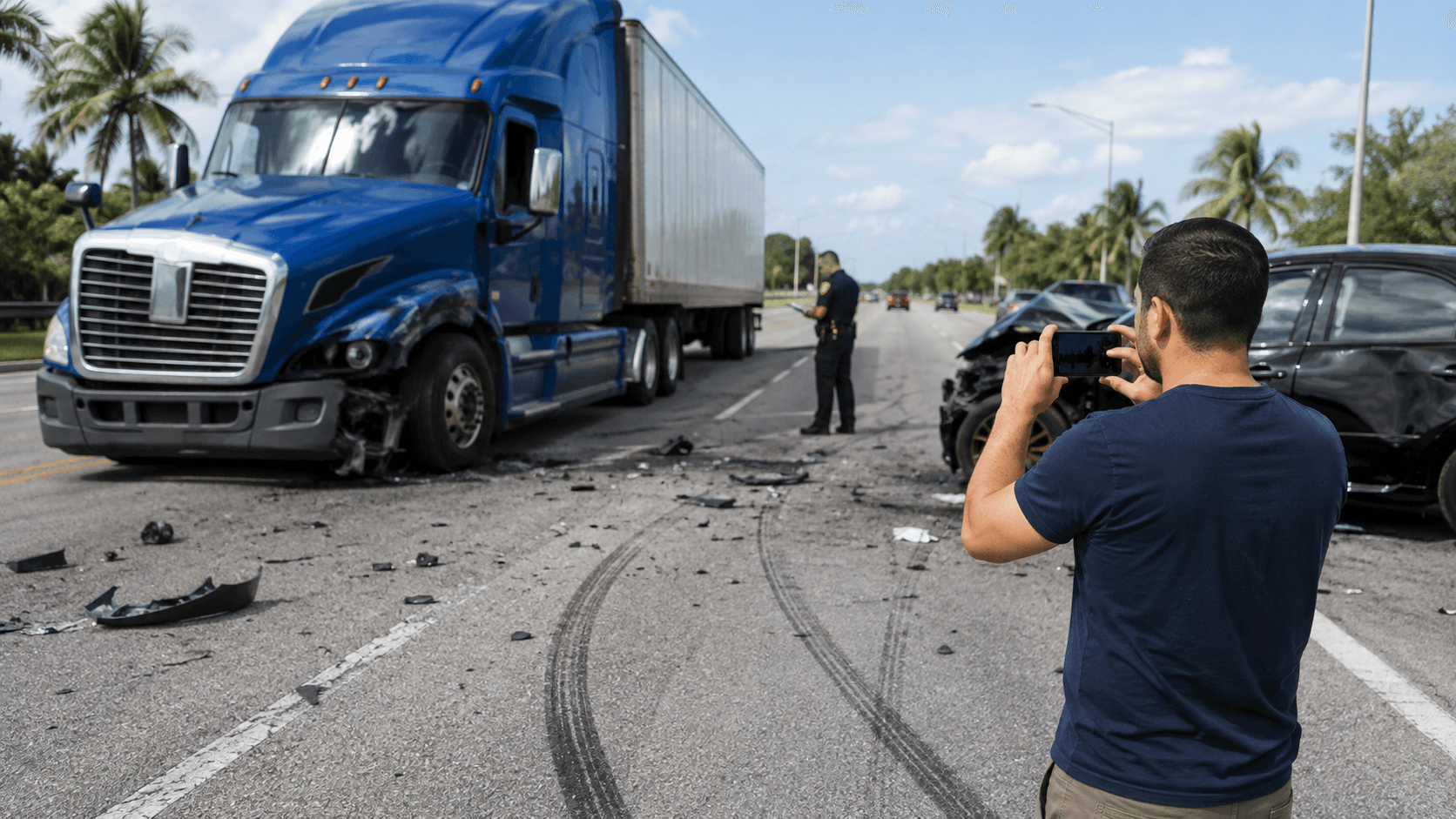
2. Photograph the Scene Before Conditions Change
If it is safe, photograph vehicle positions, damage, debris, skid marks, cargo spills, lane markings, traffic signals, weather, lighting, road signs, nearby driveways, and any visible injuries. Wide photos can show how the crash scene was arranged, while close photos can show impact points and damage details.
Truck accident scenes can be cleared quickly because large vehicles may block traffic. Once the vehicles move, important context may be gone. Photos from the scene can help later when the parties disagree about speed, lane position, braking, or how the vehicles came together.
Evidence Tip
Photograph both the full scene and close details. Wide images can preserve road layout and vehicle position, while close images can preserve impact points, debris, cargo, and visible damage.
3. Identify the Truck, Driver, Carrier, and Insurance
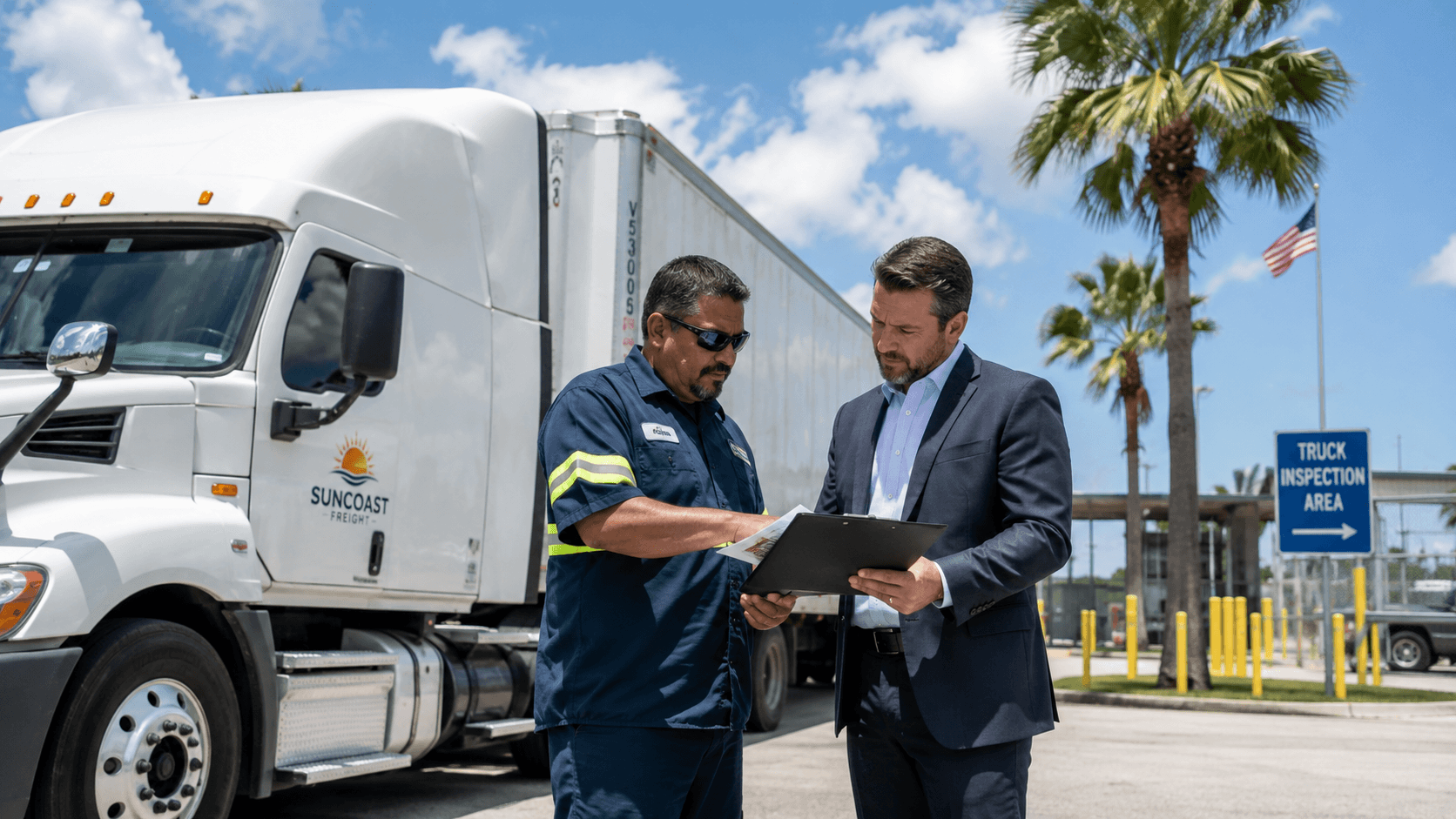
Record the driver's name, license information, employer or carrier name, USDOT number if visible, license plate, trailer number, insurance information, and any company markings on the truck or trailer. If the truck was hauling cargo, note what type of load appeared to be involved.
Do not assume the driver is the only potentially responsible person or company. Depending on the facts, the carrier, maintenance contractor, cargo loader, broker, or another business may need to be reviewed.
4. Preserve Witnesses and Video Sources
Get names and contact information for passengers, other drivers, pedestrians, workers, nearby residents, and anyone who saw the crash or the moments before it. Witnesses may remember unsafe lane changes, sudden braking, drifting, speeding, or other details that are not obvious from vehicle damage alone.
Nearby businesses, intersections, dash cameras, truck cameras, doorbell cameras, or traffic systems may have video. These recordings are often overwritten quickly, so identifying video sources early can matter more than people realize.
Free Consultation
Have questions about your next step?
A short conversation can help you understand what records matter, how insurance may respond, and whether legal help makes sense for your situation.
5. Consider Electronic Truck Data
Commercial vehicles may contain electronic information related to speed, braking, engine activity, hours of operation, and vehicle movement. The exact data available depends on the truck, system, and facts of the case.
An injured person usually should not rely on informal promises that this information will be saved. If the crash appears serious, evidence preservation steps may be needed before data is lost through normal system use or retention schedules.
Key Point
Some truck evidence is controlled by companies, vendors, or onboard systems. Early preservation can matter because ordinary retention schedules may not protect the information forever.
6. Driver Logs, Hours, and Qualification Records May Matter
Truck cases may involve questions about whether the driver was properly qualified, trained, rested, and operating within applicable hours-of-service rules. Logs, dispatch information, route records, delivery schedules, and employment documents may become relevant.
These records are usually not available to an injured person at the scene. That is why early legal guidance may help identify what should be requested and preserved before the case becomes harder to investigate.
7. Maintenance and Inspection Records Can Help Explain the Crash
Brake issues, tire problems, lighting defects, trailer condition, coupling problems, and inspection failures can all become important in the right case. Maintenance records, inspection reports, repair invoices, and post-crash vehicle inspections may help determine whether a mechanical issue contributed.
Do not allow the focus to stay only on driver behavior if the vehicle itself may have been unsafe. A careful truck accident investigation should consider both human conduct and vehicle condition.
8. Cargo and Loading Evidence May Be Important
Improperly loaded or unsecured cargo can affect braking, turning, stability, and collision severity. Cargo weight, load distribution, securement, and documentation may matter if the truck jackknifed, rolled, lost cargo, or handled unusually before impact.
Photographs of the trailer, cargo area, spill pattern, or debris field can help preserve details that may be difficult to reconstruct later.
9. Keep Insurance and Communication Records
Save letters, emails, claim numbers, adjuster names, recorded statement requests, repair estimates, towing bills, medical bills, and all written communications from insurers. Truck cases may involve several insurers, which can make organization important from the beginning.
Avoid guessing about speed, distance, fault, or the full extent of injuries in recorded statements before the facts and medical picture are better understood.
Talk to Pipas Law Group
Have questions after an accident?
The Pipas Law Group team can review the details, explain what may matter, and help you think through your next step.