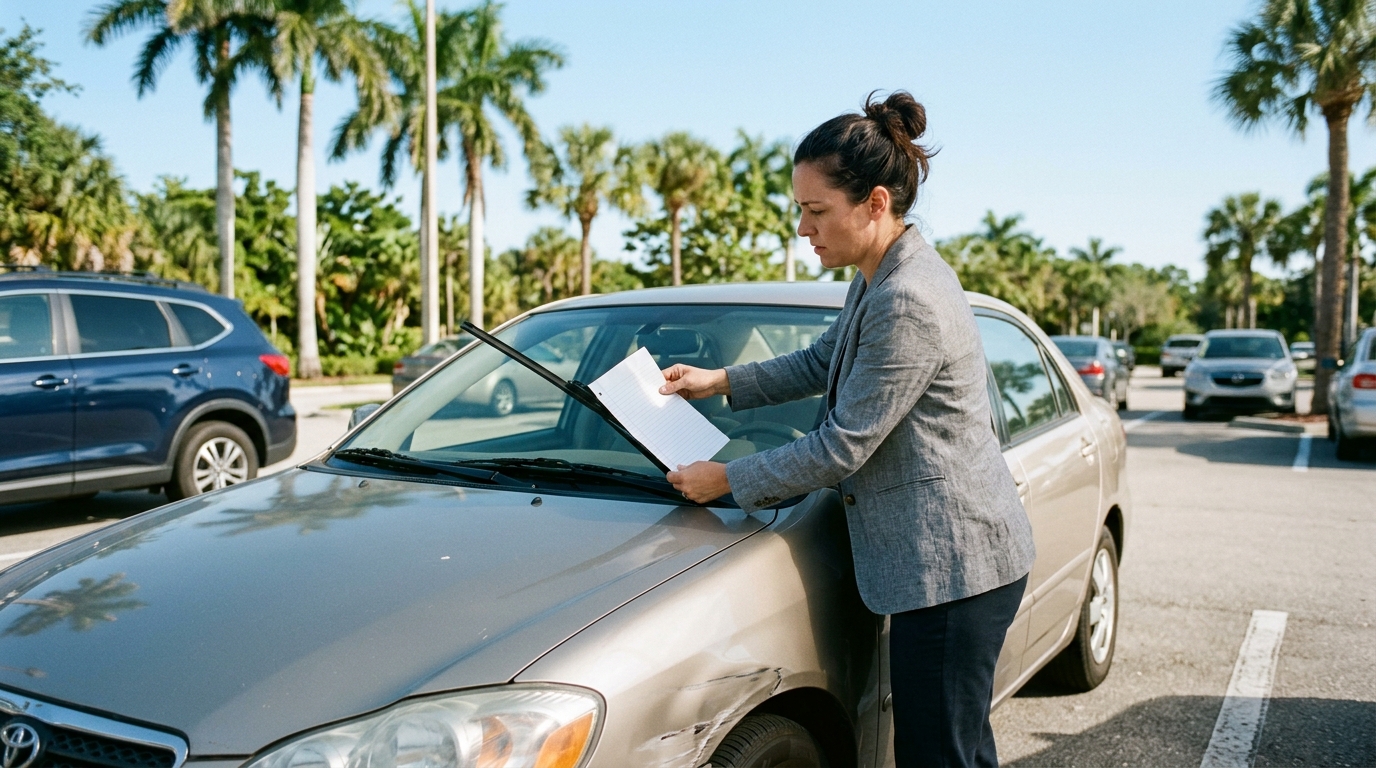
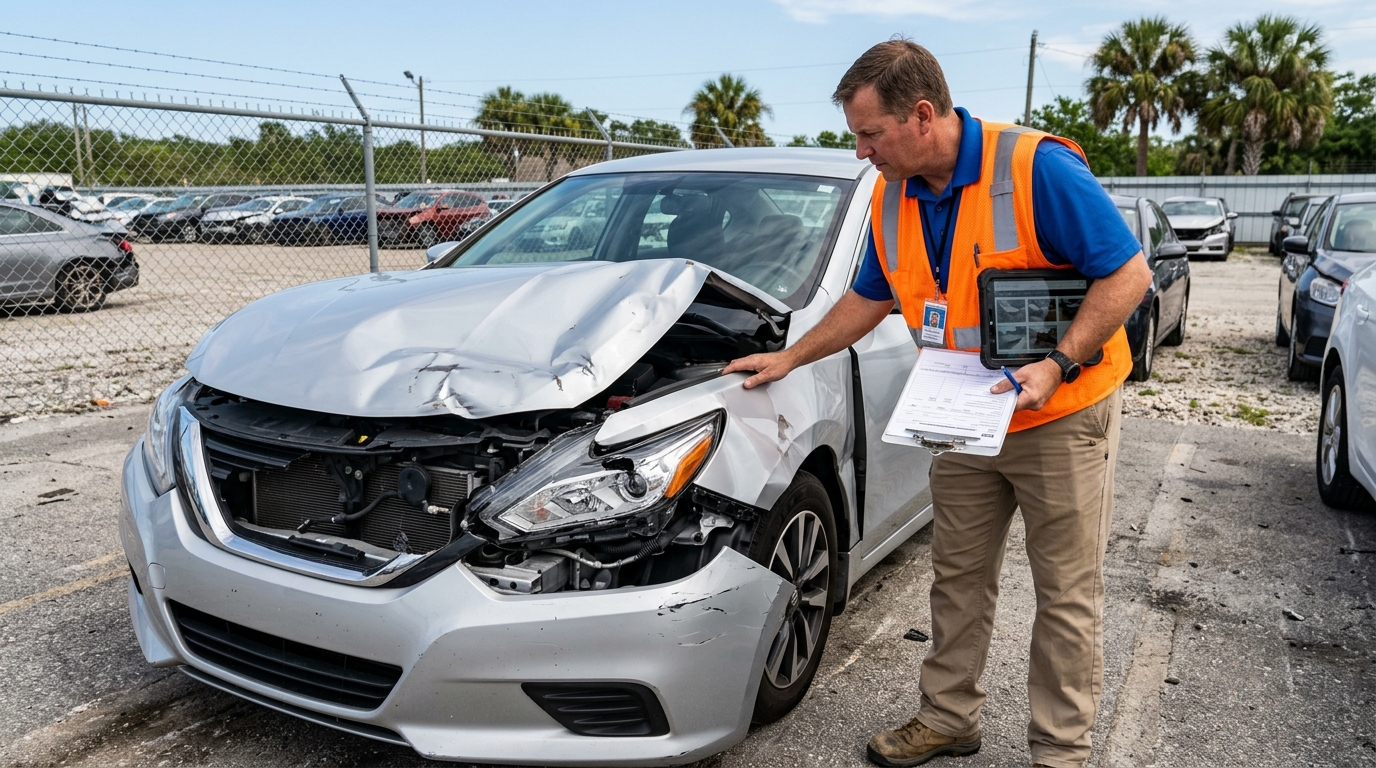
After a serious vehicle crash in Florida, accident victims frequently discover that insurance adjusters are declaring their car a total loss rather than paying to repair it. Receiving a total loss notice brings immediate financial uncertainty regarding vehicle loan payoffs, replacement costs, and title branding.
Florida law strictly governs when a vehicle must be branded with a salvage title or certificate of destruction under Florida Statutes § 319.30. Understanding how insurance companies calculate Actual Cash Value (ACV) and what rights you have to dispute low settlement offers ensures you are not shortchanged during property damage settlement negotiations.
Florida total loss laws: How insurers decide to total a vehicle
Under Florida Statutes § 319.30, an insurance company determines whether an insured damaged vehicle is a total loss based on whether the cost of repair exceeds the vehicle's pre-accident value. While many insurers use an internal 70% to 75% threshold, Florida Statutes § 319.30(3)(a) provides an 80% repair-versus-replacement standard for certain uninsured or self-insured vehicles.
If the estimated cost of repairs plus the salvage value of the wreck exceeds the Actual Cash Value (ACV) of the vehicle immediately prior to the crash, the insurer will deem the car an economic total loss rather than authorize repairs.
Good to Know
Insurance adjusters often use automated software (such as CCC ONE or Mitchell) that pulls wholesale or poorly matched vehicle listings to undervalue your car. You have the legal right to inspect their valuation report and challenge inaccurate comparable vehicles.
Salvage title vs. Certificate of Destruction in Florida
Florida recognizes a critical distinction between title branding categories following a total loss:
1. Salvage / Rebuildable Title: Issued when a vehicle has been declared a total loss but can legally be rebuilt, inspected by Florida Highway Safety and Motor Vehicles (FLHSMV), and returned to road service with a "Rebuilt" title brand.
2. Certificate of Destruction: Issued when damage is catastrophic (often exceeding 90% of ACV on newer vehicles) or structural integrity cannot be restored. A vehicle with a Certificate of Destruction can never be titled, registered, or driven on Florida roadways again; it can only be dismantled for scrap or parts.
What Actual Cash Value (ACV) really means and how to dispute a low offer
Actual Cash Value is defined as the fair market value of your vehicle in its exact pre-crash condition—factoring in age, mileage, trim package, maintenance records, and local market sales in Tampa Bay or Central Florida. It is not what you owe on your auto loan, nor is it the MSRP of a new replacement car.
If the insurer's ACV offer is unreasonably low, you can dispute it by taking the following steps:
• Request the full CCC or Mitchell valuation report from the adjuster.
• Check for omitted options (sunroof, leather seats, upgraded audio, towing packages).
• Gather local dealer listings for identical year, make, model, and trim with comparable mileage within a 50-mile radius.
• Submit receipts for recent major mechanical maintenance (new tires, transmission, brakes installed shortly before the wreck).
Evidence Tip
Do not sign a broad general release from the property damage insurer that includes bodily injury language. Property damage settlements should always be separate from ongoing medical and personal injury claims.
Owner retention: Can you keep your car after it is declared a total loss?
Yes, in many cases Florida vehicle owners can choose "owner retention." If you wish to keep your totaled vehicle, the insurance company will deduct the vehicle's salvage value (what a salvage yard would have paid at auction) from your final settlement check.
However, before opting to keep a totaled car, consider: (1) your lender must consent if you still owe money on a vehicle loan, (2) you must obtain a salvage title from the FLHSMV, (3) you must complete all safety repairs and pass a physical state inspection before it can be re-registered, and (4) many insurance carriers refuse to write comprehensive or collision coverage on rebuilt titles.
Frequently Asked Questions
Salvage Titles After a Florida Car Crash: Total Loss Thresholds, ACV & Claim Settlements FAQs
Does Florida have a mandatory 70% total loss rule?
No single universal 70% rule exists across all Florida claims; insurers make economic total loss determinations based on whether repairs plus salvage value exceed market value, while § 319.30 establishes statutory total loss and title branding criteria.
Will GAP insurance pay off my car loan if my vehicle is totaled?
If you purchased Guaranteed Asset Protection (GAP) insurance, it typically covers the difference between the insurance company's Actual Cash Value payout and the remaining balance on your auto lease or loan.
Can I negotiate the insurance company's total loss offer?
Yes. You are not obligated to accept the initial valuation. Providing comparable vehicle listings from local dealerships, proof of recent upgrades, and pointing out condition rating errors frequently increases total loss settlement checks.
Does settling my totaled car claim affect my personal injury claim?
Not if the property damage release is properly drafted. Always verify that the release explicitly states it only resolves property damage and vehicle claims, preserving your rights to pursue PIP and bodily injury compensation.
Talk to Pipas Law Group
Have questions after an accident?
The Pipas Law Group team can review the details, explain what may matter, and help you think through your next step.