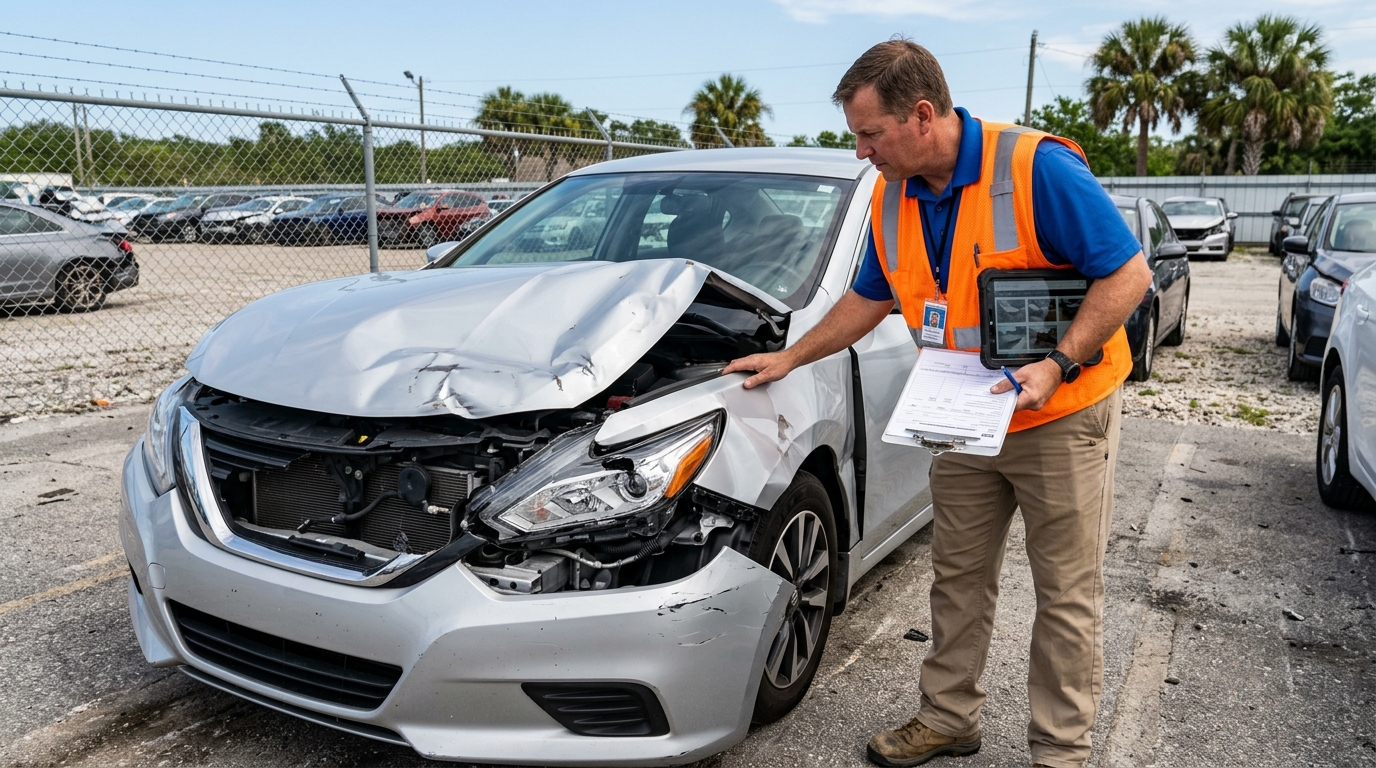
A low-speed collision with an unattended vehicle in a parking lot, parking garage, or neighborhood street is one of the most common accidents in Florida. Because the impact often occurs at low speeds with no one inside the other car, many drivers mistakenly assume the situation is informal.
In Florida, however, failing to follow statutory duties after hitting an unattended vehicle can quickly turn a minor fender-bender into a criminal misdemeanor hit-and-run charge under Florida Statutes § 316.063. Knowing what the law requires protects both your driving record and your insurance coverage.
Florida Statutes § 316.063: Legal duties upon damaging an unattended vehicle
Under Florida Statutes § 316.063(1), any driver who collides with and damages an unattended vehicle or other property must immediately stop at the scene.
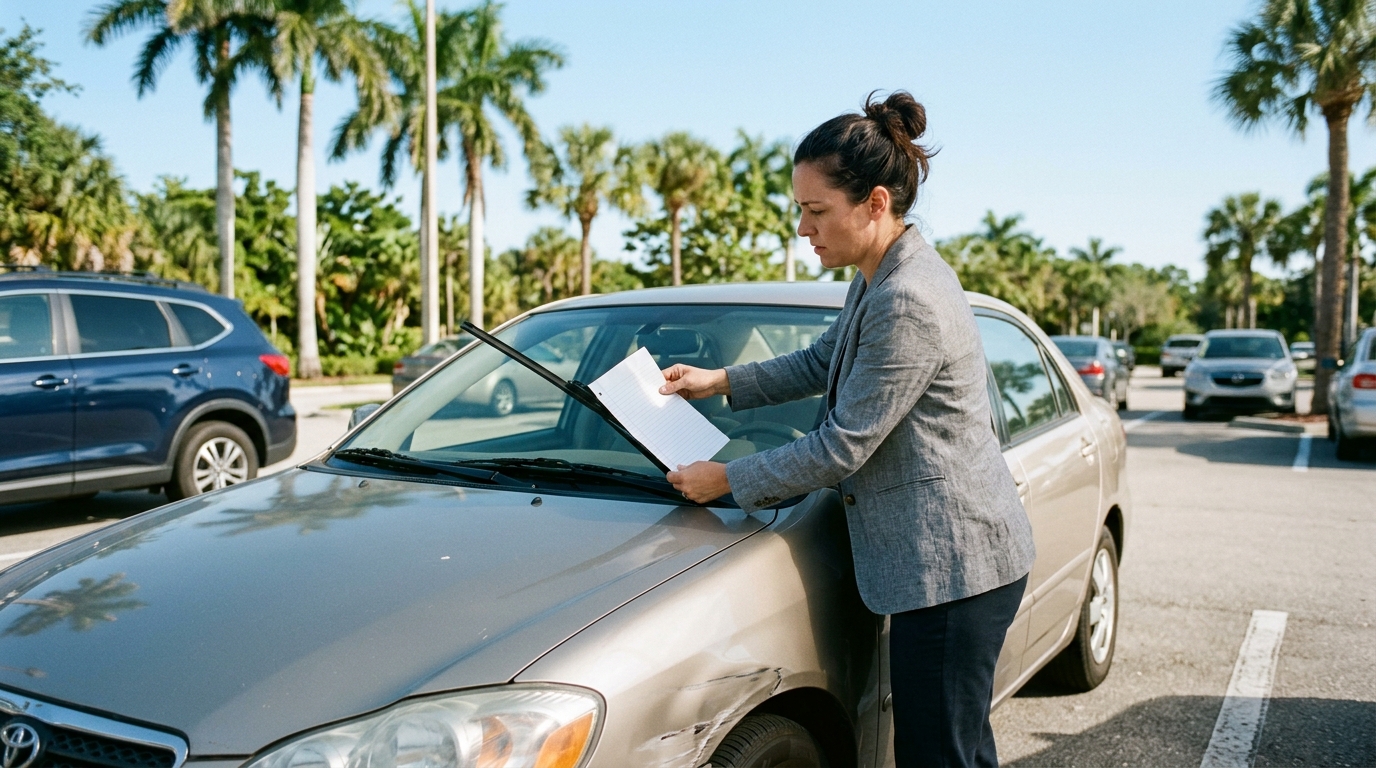
The law requires the driver to either locate and notify the owner or operator of the driver's name, address, and vehicle registration number, or securely attach a written notice in a conspicuous place on the vehicle containing that information. In addition, the driver must notify the nearest authorized police authority without unnecessary delay.
Failing to comply with these statutory requirements is classified as a second-degree misdemeanor under Florida law, punishable by up to 60 days in jail and fines, even if the vehicle damage was minimal.
Key Point
Leaving only a phone number or a vague note on a napkin does not satisfy Florida Statutes § 316.063. The statute explicitly requires your full legal name, home address, and vehicle registration number, as well as prompt notification to law enforcement.
Step-by-step checklist: What to do immediately after hitting a parked car
1. Stop and park safely: Turn on your hazard lights, remain at the scene, and ensure there is no traffic obstruction or injury emergency.
2. Attempt to locate the vehicle owner: If the collision occurred in a shopping plaza, grocery store, or apartment complex, check with customer service or building management to make an announcement or identify the owner.
3. Leave a secure written note: If the owner cannot be located, write down your full name, address, phone number, vehicle registration number, and insurance carrier. Place the note securely under the windshield wiper where weather will not destroy it, and take a clear photograph of the note in place.
4. Notify local law enforcement: Call the non-emergency dispatch for the local police department or Florida Highway Patrol to report the incident and obtain an incident or CAD reference number.
5. Thoroughly document the scene: Photograph vehicle damage on both cars, license plates, paint transfer, parking stall lines, lighting, and any visible surveillance cameras in the area.
6. Contact your insurance carrier: Report the claim promptly under your policy's notice conditions so that your Property Damage Liability (PDL) coverage can address the other party's repairs.
Insurance coverage: How Property Damage Liability (PDL) applies
Florida requires drivers to carry a minimum of $10,000 in Property Damage Liability (PDL) insurance under Florida Statutes § 324.022. PDL coverage is specifically designed to pay for damage that you legally cause to another person's property, such as bodywork, paint repairs, or bumper replacement on the parked car.
PDL does not cover damage to your own vehicle. If your own car suffered damage in the collision, you must use collision coverage under your own auto policy, subject to your chosen deductible.
Documenting the exact damage prevents dishonest claims where a vehicle owner attempts to attribute unrelated pre-existing dents or scratches to your minor impact.
Good to Know
Surveillance cameras in Florida commercial parking lots and residential doorbells frequently capture license plates. Never leave the scene hoping no one noticed; proactive documentation is your strongest legal defense.
What if you already left the scene without leaving a note?
If panic or confusion caused you to leave the scene before complying with § 316.063, do not attempt to conceal the damage or fabricate a story. Modern parking lots are heavily equipped with security cameras, and witnesses frequently note license plates.
Contacting local law enforcement promptly to provide your information before an officer arrives at your home can significantly mitigate criminal exposure. If law enforcement reaches out to you regarding a hit-and-run investigation, speaking with a Florida attorney before giving an interview can help protect your rights.
Frequently Asked Questions
What to Do If You Hit a Parked Car in Florida: Legal Duties, Insurance & Hit-and-Run Laws FAQs
Is leaving a note enough to avoid hit-and-run charges in Florida?
Leaving a note satisfies the owner-notification alternative under Florida Statutes § 316.063(1), provided it includes your name, address, and vehicle registration number. However, the statute also requires notifying the nearest authorized police authority without unnecessary delay.
Will my Florida insurance rates increase if I hit a parked car?
Because hitting an unattended parked car is almost always considered an at-fault accident, your insurer may adjust your premium upon policy renewal unless you have an accident-forgiveness endorsement.
What if the parked car was illegally parked?
Even if the other car was parked illegally or outside the lines, Florida drivers still owe a duty of reasonable care to avoid striking stationary objects. While comparative negligence under § 768.81 may reduce property damage liability in rare cases, it does not excuse leaving the scene without identifying yourself.
Can I face criminal misdemeanor charges for a simple scratch?
Yes. Florida Statutes § 316.063 does not have a minimum dollar threshold for property damage; failing to stop and provide identifying information after causing any property damage is a second-degree misdemeanor.
Talk to Pipas Law Group
Have questions after an accident?
The Pipas Law Group team can review the details, explain what may matter, and help you think through your next step.