
Truck accidents are different from many ordinary vehicle collisions. A commercial vehicle may be owned by one company, operated by another, maintained by a separate contractor, and insured under commercial policies. The truck may also carry electronic records, inspection documents, dispatch information, and other evidence that is not typically present in a two-car crash. For someone injured in St. Petersburg, the first priority should always be personal safety and appropriate medical attention. Once the immediate danger has passed, several practical steps can help preserve information and reduce avoidable problems. The guidance below is general information, not a substitute for advice about a specific case.
Move to Safety When It Is Possible to Do So
A collision involving a tractor-trailer, delivery truck, dump truck, box truck, or other commercial vehicle can leave debris, damaged vehicles, leaking fluids, and moving traffic around the crash scene. If the vehicle can be moved safely and local authorities direct you to do so, move out of active traffic. If movement is unsafe, remain in a protected location and wait for emergency responders. Do not attempt to inspect the truck closely, stand between damaged vehicles, or enter an unsafe traffic lane to take photographs. Evidence is important, but personal safety comes first.
Call 911 and Report the Crash
Florida requires law enforcement notification for crashes involving injury or death and for certain crashes involving significant property damage or other listed circumstances. A truck collision should be reported promptly when anyone is hurt, complains of pain, or the scene presents a safety risk. When speaking with the dispatcher, provide the location, direction of travel, visible hazards, and whether anyone appears injured. Do not guess about speed, fault, or the cause of the collision. State what you directly observed. The responding agency may prepare a Florida Traffic Crash Report. Ask the officer how and when a copy can be obtained. FLHSMV provides information about purchasing crash reports and self-reporting qualifying crashes through the Florida Crash Portal.
Accept Medical Evaluation and Follow Up Promptly
The force generated by a large commercial vehicle can cause injuries that are not immediately obvious. Adrenaline, shock, and confusion may temporarily mask pain. Headaches, stiffness, numbness, dizziness, abdominal discomfort, or increasing pain can develop later. Tell emergency personnel about every symptom you notice, even if it seems minor. If you are not transported from the scene but symptoms appear or worsen, seek appropriate medical evaluation. Keep discharge instructions, referrals, prescriptions, and appointment records. Following reasonable medical recommendations can support your recovery and create a clearer record of what happened after the crash.
Document the Scene Without Putting Yourself at Risk
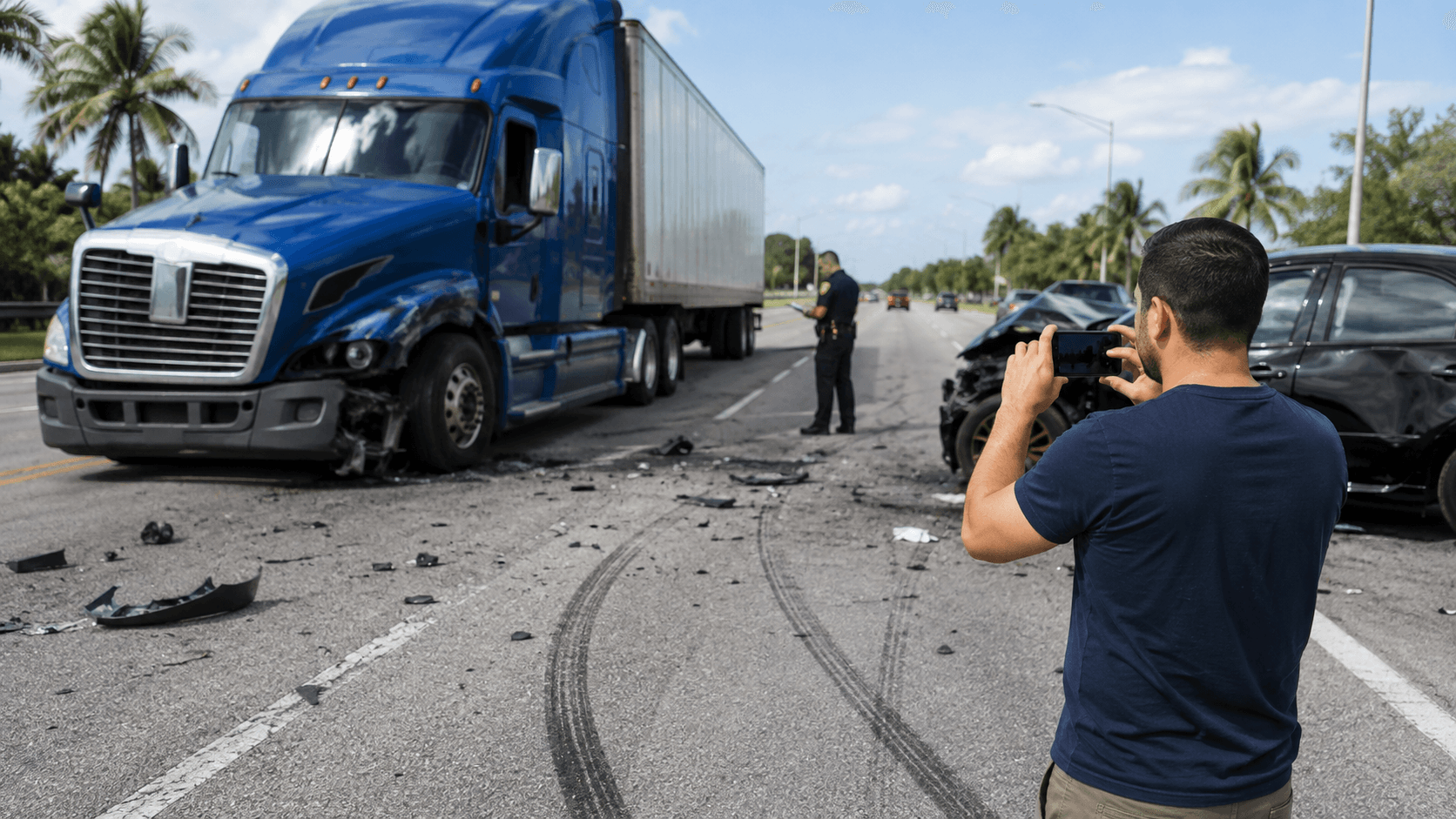
When it is safe, photographs and short videos can preserve conditions that may change quickly. Useful images may include:
• The position of the vehicles before they are moved;
• Damage to the truck, trailer, and other vehicles;
• Skid marks, debris, spilled cargo, fluid, and damaged barriers;
• Traffic signals, lane markings, construction zones, and warning signs;
• The commercial vehicle number, license plate, company name, and U.S. DOT number;
• Weather, visibility, and roadway conditions; and
• Visible injuries, if they can be documented respectfully and safely.
Do not alter the scene or climb onto the truck. If your condition prevents you from documenting anything, focus on medical care. A passenger, family member, or investigator may be able to gather additional information later.
Identify the Driver, Truck, Carrier, and Available Insurance
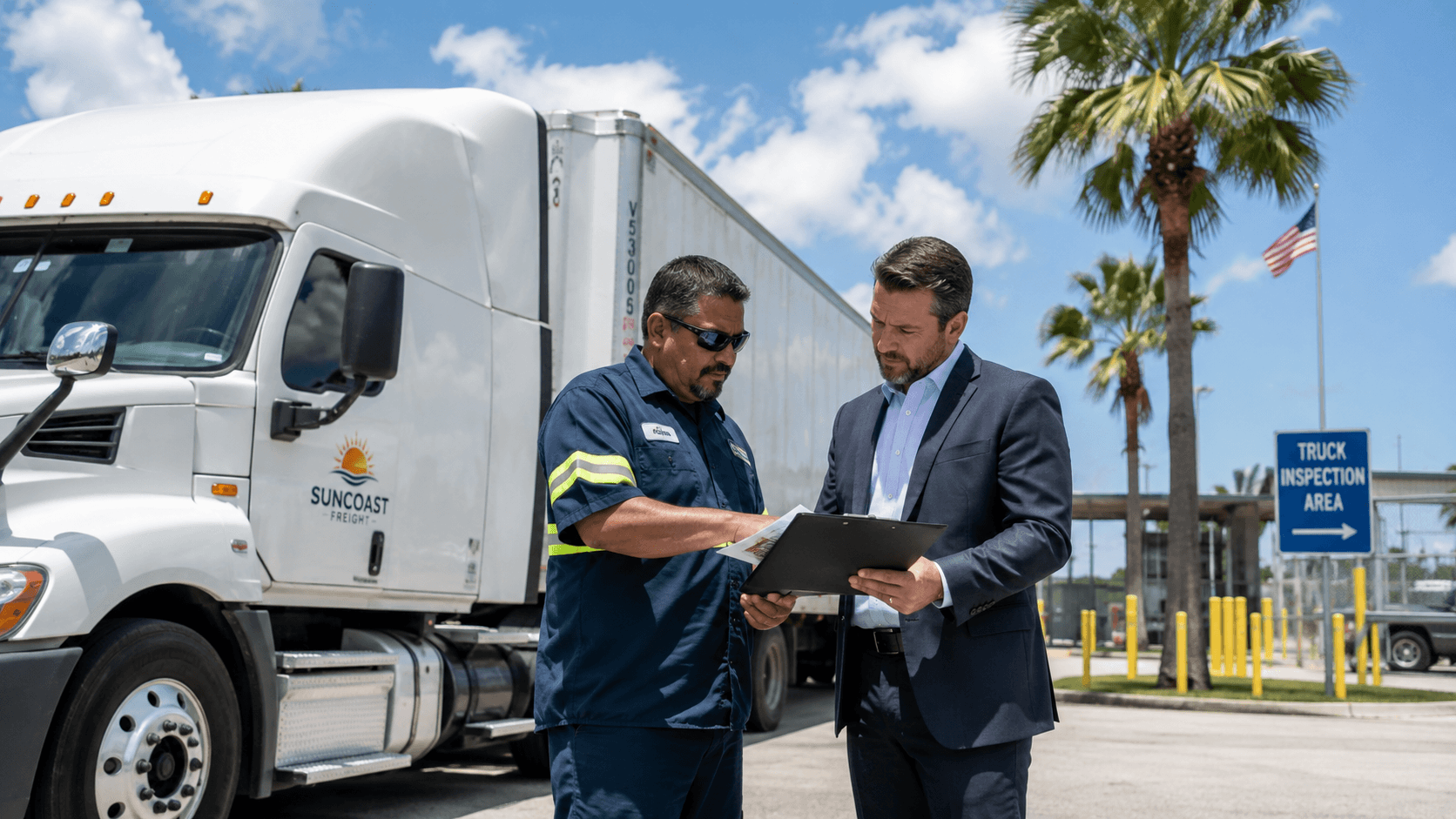
Commercial trucks can involve several different business entities. Record or photograph the driver’s name and license information, the truck and trailer plates, the motor carrier name, the U.S. DOT number, and the insurance details provided at the scene. If the name painted on the truck differs from the name on the registration or insurance card, preserve both. Also collect contact information from witnesses. A witness who saw lane movement, braking, a traffic signal, or the events immediately before impact may later provide important context. Avoid debating fault with the truck driver or witnesses.
Be Careful With Early Insurance Communications
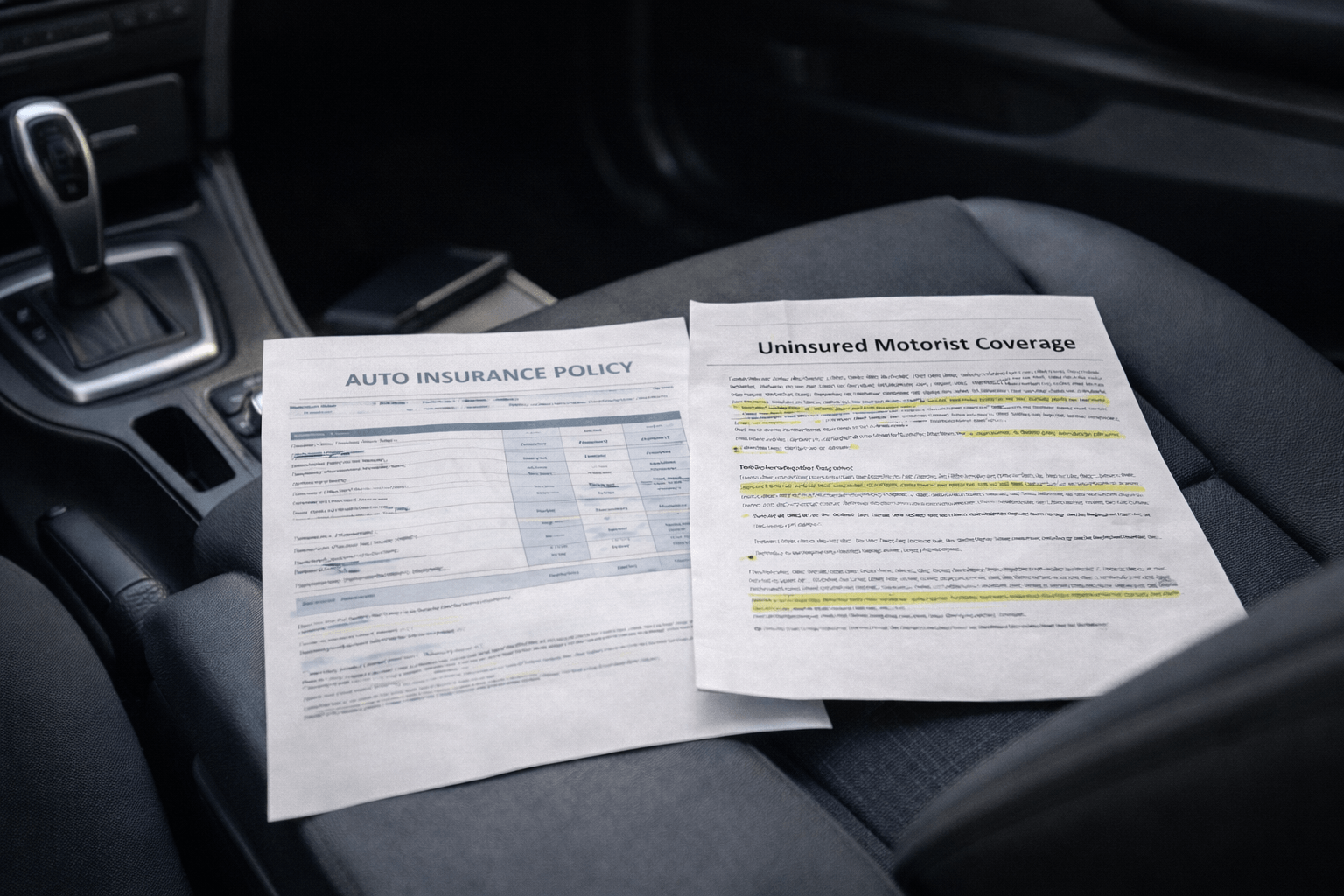
A trucking company or commercial insurer may begin investigating quickly. An adjuster may request a recorded statement, medical authorization, photographs, or a broad release. You can provide necessary notice of the crash without speculating about injuries or signing documents you do not understand. Early symptoms can change, and the full cost of medical treatment or missed work may not yet be known. A quick settlement may include a release that ends the claim. Before accepting payment or signing a release, make sure you understand what rights would be given up.
Free Consultation
Have questions about your next step?
A short conversation can help you understand what records matter, how insurance may respond, and whether legal help makes sense for your situation.
Preserve Records From the First Day
Create one folder, digital or physical, for crash-related materials. Keep the crash report number, photographs, medical records, bills, prescriptions, towing receipts, repair estimates, rental expenses, insurance letters, and proof of missed work. A short daily record of symptoms, appointments, activity limits, and missed events may also help you remember how recovery progressed. Do not edit original photographs or delete messages related to the crash. Save copies of emails, text messages, voicemail recordings, and claim correspondence. If a damaged vehicle is likely to be repaired or destroyed, discuss whether an inspection is needed before its condition changes.
Understand Why Truck Accident Evidence Can Disappear
Commercial truck cases may involve evidence controlled by the driver, carrier, broker, maintenance provider, cargo company, or another business. Depending on the facts, relevant materials may include electronic logging device data, dispatch records, driver qualification documents, inspection and maintenance records, onboard camera footage, electronic control module data, and cargo-loading information. Electronic logging devices can record driving time and other hours-of-service information. FMCSA states that motor carriers generally must retain ELD records of duty status and supporting documents for six months. Other records may follow different retention periods. Because some data can be overwritten or discarded, a timely preservation request may be important in a serious truck accident case.
Do Not Assume the Truck Driver Is the Only Potentially Responsible
Party Responsibility depends on the evidence. The driver may be involved, but the motor carrier, vehicle owner, maintenance contractor, cargo loader, broker, manufacturer, or another party could also require investigation. Examples may include unsafe driving, inadequate vehicle maintenance, defective components, improperly secured cargo, negligent hiring or supervision, or violations of safety requirements. Not every crash involves every potential party, and the presence of a company name on a truck does not automatically establish legal responsibility. Ownership records, contracts, insurance policies, inspection history, and electronic data may be needed to understand how the operation was structured.
Avoid Posting Detailed Information About the Crash Online
Insurance representatives may review publicly available social media. A photograph, location tag, or casual comment can be interpreted without context. Avoid posting opinions about fault, descriptions of your injuries, settlement discussions, or photographs that could be misunderstood. Preserve existing content rather than deleting it after a dispute begins.
Learn Which Deadlines May Apply
Florida law generally provides a two-year limitations period for negligence actions, but the correct deadline depends on the date and facts of the case. Different rules may apply to wrongful death matters, claims involving a government vehicle or public entity, minors, or other special circumstances. Insurance policies can also contain separate notice requirements.
Waiting until the deadline approaches can make it harder to locate witnesses, secure video, inspect vehicles, or preserve commercial records. The practical need to investigate may arise well before the final filing deadline.
Consider Speaking With a St. Petersburg Truck Accident Lawyer
A lawyer evaluating a truck accident may review the police report, photographs, medical information, available insurance, vehicle ownership, motor carrier records, and potential sources of evidence. Legal counsel may also communicate with insurers, send preservation requests, coordinate inspections, and explain how Florida law applies to the specific facts. Contacting a law firm does not guarantee that a claim will be accepted or that compensation will be recovered. It can, however, give an injured person an opportunity to ask questions before signing releases or making decisions that may be difficult to reverse.
What Information Should You Bring to an Initial Consultation? Bring whatever is reasonably available. Helpful items may include:
• The crash report or report number;
• Photographs and videos;
• The truck driver’s, carrier’s, and insurer’s information;
• Medical discharge papers and upcoming appointment information;
• Insurance correspondence and claim numbers;
• Repair estimates, towing records, and photographs of vehicle damage;
• Employer records showing missed time or reduced income; and
• Names and contact information for witnesses.
Do not delay a consultation simply because every document is not yet available. The initial discussion can identify what information may still need to be requested.
Talk to Pipas Law Group
Have questions after an accident?
The Pipas Law Group team can review the details, explain what may matter, and help you think through your next step.