Slip-and-fall cases can be difficult because the dangerous condition may disappear quickly. A spill can be cleaned, a mat can be moved, a warning sign can be added, or poor lighting can be fixed before anyone fully understands how the fall happened.
That is why notice is such an important concept. A property owner is not automatically responsible for every fall. The case often turns on whether the owner or business had actual notice or constructive notice of the hazard and failed to respond in a reasonable way.
1. What Does Notice Mean in a Slip-and-Fall Case?
Notice generally refers to whether the property owner knew, or reasonably should have known, about the dangerous condition before the fall. This matters because injury claims usually require more than showing that someone slipped.
The claim often must connect the hazard to the owner's responsibility. If a dangerous condition existed long enough, appeared repeatedly, or was created by the business itself, notice may become easier to prove.
2. Actual Notice
Actual notice means the property owner, manager, employee, or responsible person actually knew about the hazard before the fall. This may happen when someone reports a spill, an employee sees the condition, or a prior incident occurs in the same area.
Evidence of actual notice may come from incident reports, employee statements, maintenance logs, customer complaints, text messages, surveillance video, or testimony.
3. Constructive Notice
Constructive notice means the owner may not admit knowing about the hazard, but the circumstances suggest the owner should have discovered it through reasonable care. This often depends on how long the hazard existed or whether similar hazards occurred regularly.
For example, a spill with track marks, dirt, footprints, or signs of having spread may suggest it was not brand new. Repeated water accumulation near an entrance may also create a stronger notice argument.
4. Why Timing Matters So Much
Timing is often one of the hardest parts of a slip-and-fall case. If a spill appeared seconds before the fall, liability may be more difficult. If it existed for a long time without cleanup or warning, the case may be stronger.
Because timing is so important, video preservation, witness accounts, inspection records, and employee activity in the area can be critical.
5. Incident Reports and Employee Responses
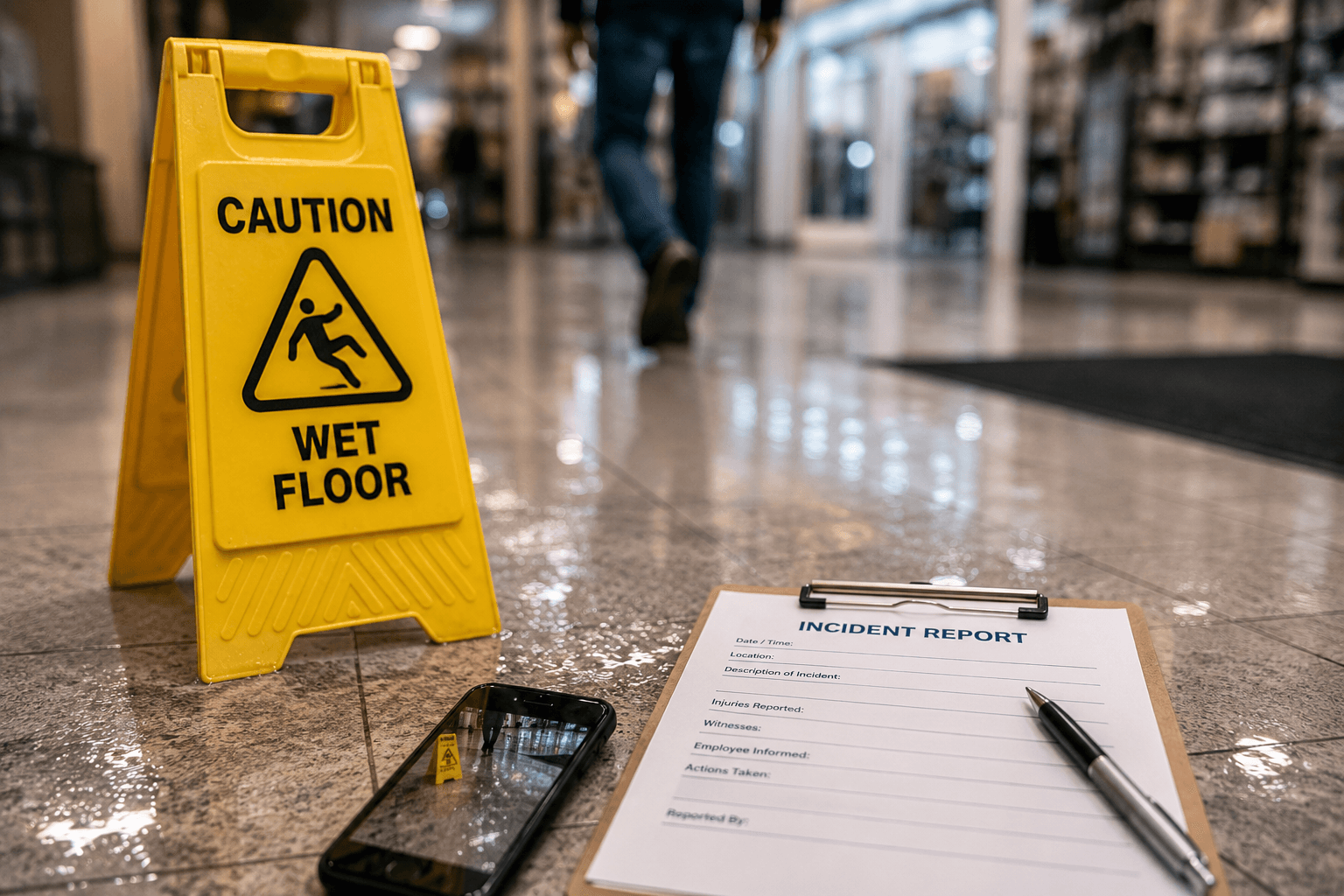
If you fall at a store, restaurant, apartment complex, office, hotel, or parking area, report the incident as soon as you can. Ask for the name of the person who took the report and keep a copy or photo of any report number if available.
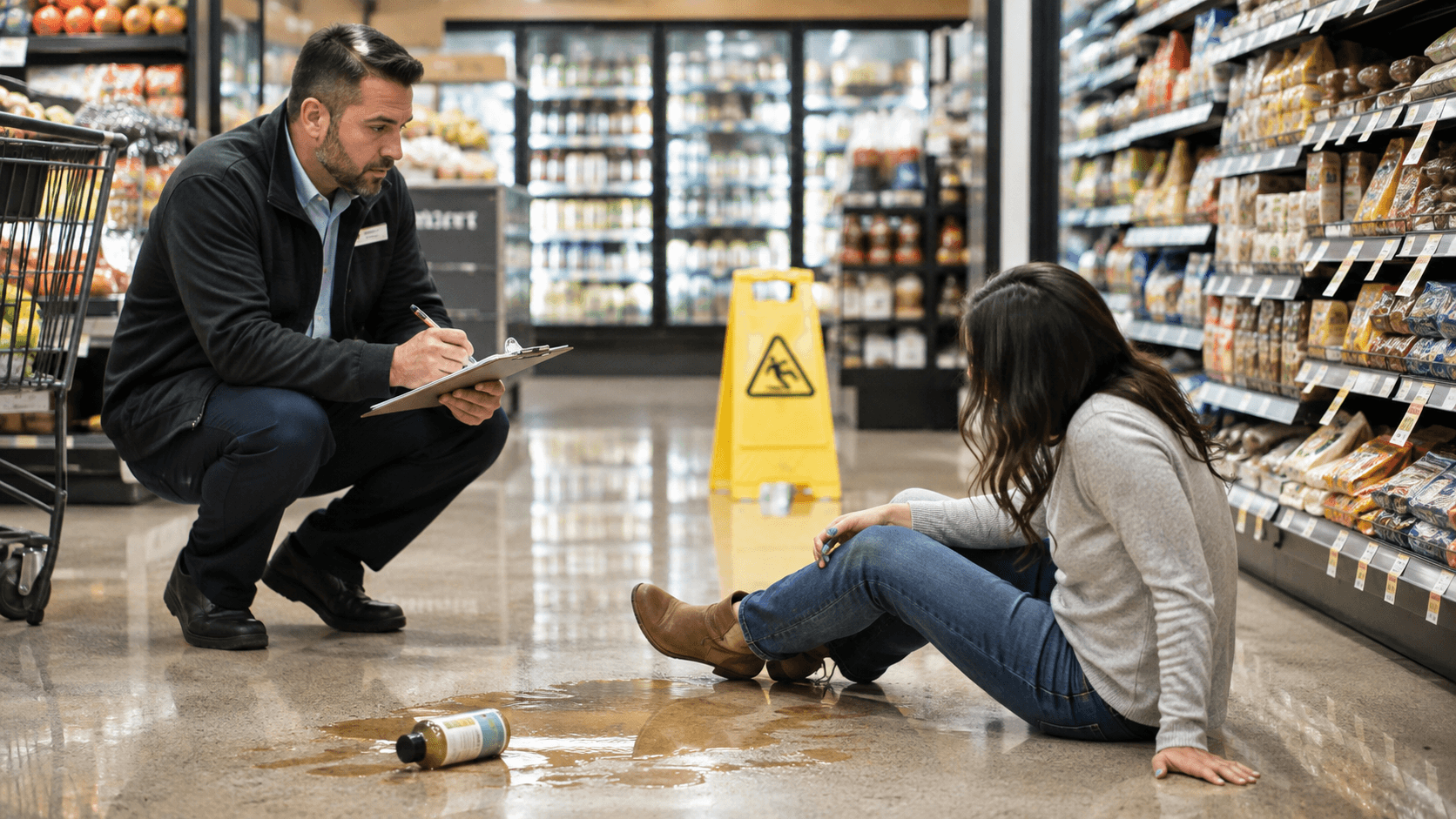
The way employees respond may matter. Did they say they knew about the condition? Did they clean it immediately? Did they place a warning sign only after the fall? Those details should be documented while still fresh.
Free Consultation
Have questions about your next step?
A short conversation can help you understand what records matter, how insurance may respond, and whether legal help makes sense for your situation.
6. Surveillance Video Can Be Critical
Video may show when the hazard appeared, whether employees walked by it, whether anyone tried to clean it, and how the fall occurred. It may also show lighting, crowd flow, warning signs, and the condition of the walkway.
Many video systems overwrite footage quickly. A request to preserve video should be made promptly when a serious injury occurs.
7. Common Property Settings
Slip-and-fall notice issues can arise in grocery stores, restaurants, apartment complexes, office buildings, sidewalks, hotels, parking lots, and retail stores. Each setting has different inspection practices and different types of hazards.
In New Port Richey, St. Petersburg, and other Florida communities, the location matters less than the evidence showing who controlled the property and what they knew or should have known.
8. The Injured Person's Conduct May Also Be Reviewed
Insurers may argue that the hazard was open and obvious, that the person was not watching where they were going, or that footwear, distraction, or movement contributed to the fall. Florida comparative fault rules may affect recovery depending on the facts.
That is why documentation should include the hazard, lighting, layout, warning signs, and anything that helps explain why the danger was not reasonably avoidable.
9. What Evidence Should Be Preserved?
Preserve photos of the exact hazard, surrounding area, lighting, shoes, clothing, injuries, incident report details, witness names, medical records, and communications from the property owner or insurer.
Do not rely only on memory. Slip-and-fall scenes can change quickly, and later disagreement often focuses on details that seemed small at the time.
10. Medical Treatment and Consistent Records
Medical documentation can become important because fall injuries are sometimes minimized as soreness or embarrassment. If pain continues, worsens, or affects daily activity, medical evaluation can help identify the injury and create a clear timeline.
Records from emergency care, urgent care, primary physicians, specialists, imaging, physical therapy, and work restrictions may all help explain how the fall affected the injured person.
11. Why These Cases Should Be Reviewed Early
Slip-and-fall claims often become harder when the scene changes before evidence is preserved. Video may be overwritten, employees may move on, and witnesses may become difficult to locate.
Early review can help determine whether the condition, timing, notice, property control, and injury documentation support a claim.
Talk to Pipas Law Group
Have questions after an accident?
The Pipas Law Group team can review the details, explain what may matter, and help you think through your next step.