Slip and fall claims often turn on details that are easy to lose. Water may be mopped, merchandise may be restacked, a broken surface may be repaired, and surveillance systems may overwrite footage. A person who is hurt may also be focused on pain, embarrassment, or getting home rather than documenting the scene. In Florida, the evidence needed depends on the location and the type of hazard. A fall involving a spilled liquid inside a business may raise different questions from a fall caused by a broken stair, poor lighting, an uneven walkway, or a condition at a private residence. The practical steps below are intended to preserve useful information without placing safety or medical care second.
Report the Incident Before Leaving, When Possible
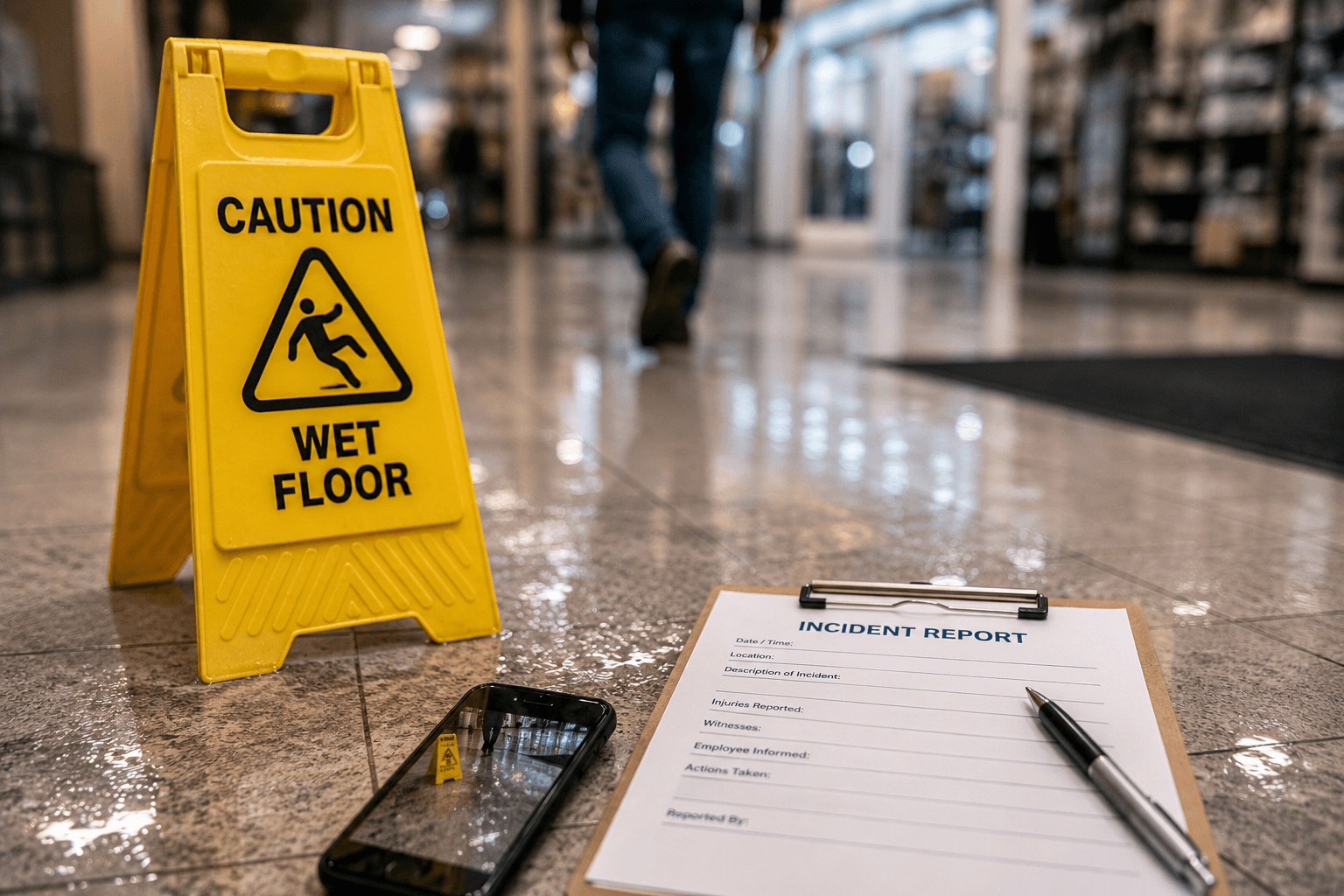
Tell a manager, property owner, employee, security officer, landlord, or other responsible person that a fall occurred. Ask that an incident report be created and make sure the report identifies the correct date, time, and location. If the report is written by someone else, request a copy or ask how it can be obtained later. Describe what you directly observed. Avoid guessing about how long the condition existed or who caused it. If you are in too much pain to complete a report, ask a family member or witness to obtain the name and contact information of the person who received notice.
Photograph the Hazard and the Wider Scene
Close-up photographs can show the substance, defect, or object involved, but wide photographs are also important. They can show where the condition was located in relation to aisles, entrances, stairs, displays, lighting, warning cones, mats, cameras, and nearby employees.
• The exact area where the fall occurred;
• Water, liquid, grease, food, debris, cords, merchandise, or another substance;
• Cracks, broken flooring, uneven pavement, loose mats, missing handrails, or damaged steps;
• Footprints, cart tracks, dirt, drying patterns, or other marks that may indicate the condition was present for some time;
• The absence or placement of warning signs and barriers;
• Lighting, weather, visibility, and surrounding traffic; and
• Visible injuries and damaged personal property, when they can be documented respectfully.
Do not recreate the event, move the hazard, or place yourself in danger to obtain a better image. Preserve original files with their date and time information instead of editing or posting them online.
Identify Witnesses and Employees Who Were Nearby
A witness may have seen the condition before the fall, the incident itself, an employee walking past the area, a prior cleanup attempt, or a statement made immediately afterward. Obtain names, telephone numbers, and email addresses when possible. Also write down the names or descriptions of employees who responded. Uniforms, name tags, work stations, and shift information may help identify people later if names are not available at the scene.
Preserve the Shoes, Clothing, and Personal Items Involved
Shoes can become important when traction, wear, or contamination is disputed. Place the shoes in a safe location and avoid cleaning, repairing, or discarding them. Preserve clothing if it contains residue, tears, or stains connected to the incident. Keep receipts or photographs showing when the shoes were obtained if that information is available. The goal is not to prove that a particular item caused or prevented the fall. It is to keep the condition of potentially relevant evidence from changing before it can be evaluated.
Seek Appropriate Medical Evaluation
Falls can affect the head, neck, back, shoulders, wrists, hips, knees, and ankles. Some symptoms are immediate, while others develop after swelling or adrenaline subsides. Tell medical providers how the fall happened and report all symptoms accurately. Keep discharge instructions, referrals, prescriptions, imaging reports, bills, and appointment records. If work restrictions or activity limits are given, request written documentation. Following reasonable medical recommendations can support recovery and create a clearer timeline.
Keep Proof That You Were at the Location
Receipts, loyalty account records, parking records, appointment confirmations, delivery logs, and phone location history may help establish when and why a person was on the property. Save these materials before accounts are deleted or paper receipts are lost. For a residential or rental property, preserve the lease, repair requests, text messages, emails, photographs, and prior complaints concerning the same area.
Free Consultation
Have questions about your next step?
A short conversation can help you understand what records matter, how insurance may respond, and whether legal help makes sense for your situation.
Ask That Surveillance Video and Electronic Records Be Preserved
Many stores, apartment buildings, hotels, parking areas, and businesses use video systems that automatically overwrite recordings. Relevant footage may include the fall, the condition before the fall, employee inspections, cleanup activity, and the route taken by the injured person. A written preservation request may identify the date, time range, location, cameras, incident report, and categories of records that should not be destroyed. Depending on the claim, other electronic evidence may include digital inspection logs, employee messages, work orders, photographs taken by staff, and sensor or alarm records.
Preserve Inspection, Cleaning, and Maintenance Information
The property owner or business may possess schedules, inspection logs, cleaning records, repair requests, vendor invoices, prior incident reports, and employee training materials. These documents can help answer whether the condition was discovered, reported, recurring, or left uncorrected. An injured person usually does not have direct access to these records at the scene. Identifying the location precisely and acting promptly can make a later request more focused.
Understand the Knowledge Issue in Florida Business Falls
Florida Statute 768.0755 addresses falls on transitory foreign substances in business establishments. It requires the injured person to prove that the business had actual or constructive knowledge of the dangerous condition and should have taken action to remedy it. Constructive knowledge may be supported by circumstantial evidence that the condition existed long enough that the business should have known about it, or that the condition occurred with regularity and was therefore foreseeable. That is why the appearance of the condition, tracks through a spill, recurring leaks, employee proximity, inspection practices, video, and witness observations can matter. Not every premises claim involves a transitory substance, and the applicable legal standard must be evaluated from the actual facts.
Avoid Rushed Insurance Statements and Releases
An insurer or claims administrator may ask for a recorded statement, broad medical authorization, or quick settlement. Provide necessary notice, but do not guess about facts or sign a release you do not understand. The full medical course and the availability of evidence may not be clear immediately. Florida also applies comparative fault rules in many negligence cases. Under current law, a party found more than 50 percent at fault for his or her own harm generally may not recover damages in a covered negligence action, while a lower percentage of fault can reduce a recovery. Because fault arguments can focus on footwear, warning signs, lighting, distractions, and where a person was looking, preserving objective evidence is important.
Keep a Complete Loss File
Maintain one folder for incident materials, photographs, medical records, bills, prescription expenses, transportation costs, damaged property, insurance correspondence, and proof of missed work. A brief daily record of pain, sleep disruption, mobility limits, appointments, and activities that could not be performed may help preserve details over time. Do not exaggerate or create a record for litigation. A simple, accurate timeline is more useful than broad statements written from memory months later.
Learn Which Deadlines May Apply
Florida law generally provides a two-year limitations period for negligence actions, but the correct deadline can depend on the incident date, defendant, legal theory, and special circumstances. Claims involving public property or government entities may require earlier written notice and additional procedures. The practical evidence deadline can be much shorter than the filing deadline. Video may be overwritten within days or weeks, employees may change jobs, and the condition may be repaired. Prompt investigation can therefore matter even when the final legal deadline is not near.
What Should You Bring to a Slip and Fall Consultation?
Bring whatever is available, even if the file is incomplete. Helpful materials may include:
• Photographs and original video files;
• The incident report or report number;
• Receipts or other proof of presence;
• Witness and employee contact information;
• The shoes and clothing worn during the fall;
• Medical discharge papers and appointment information;
• Insurance correspondence; and
• Proof of missed work and out-of-pocket expenses.
Do not delay asking questions simply because a manager refused to provide video or an incident report. Those records may require a formal request.
Talk to Pipas Law Group
Have questions after an accident?
The Pipas Law Group team can review the details, explain what may matter, and help you think through your next step.