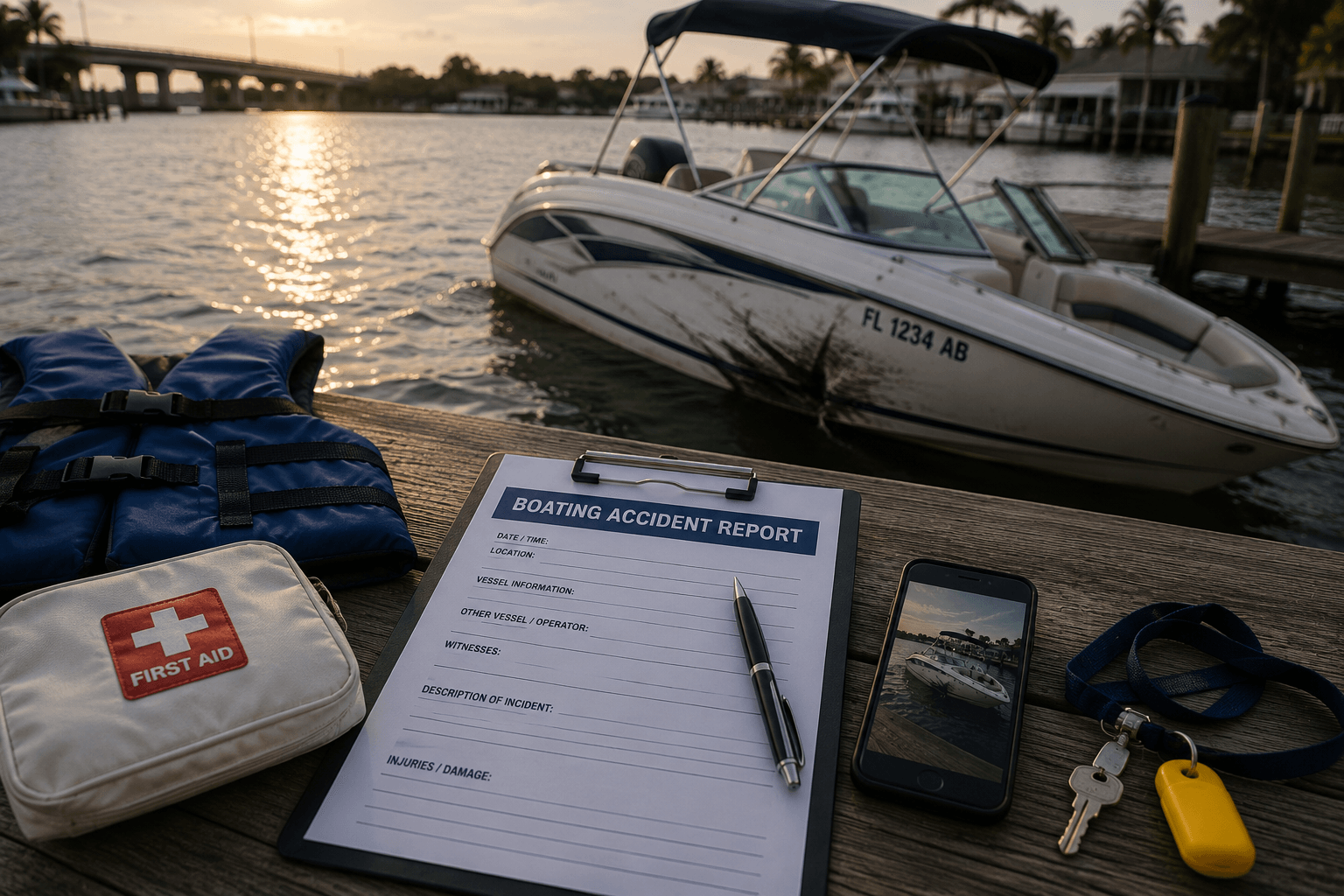
Florida boating accidents can occur in open water, channels, marinas, rivers, lakes, and near docks or bridges. Unlike a roadway crash, the scene may move, vessels may drift, weather can change quickly, and physical evidence may sink, wash away, or be repaired. Boating incidents can also involve privately owned vessels, rentals, commercial operators, tour companies, personal watercraft, marinas, manufacturers, and multiple insurance policies. The practical steps below focus on immediate safety and preservation of information.
Protect Life and Avoid a Second Accident
Call for emergency assistance and use available life-saving equipment. Move away from fire, fuel, propellers, electrical hazards, and unstable vessels. If a vessel capsizes and it is safe to remain nearby, the Florida Fish and Wildlife Conservation Commission advises staying with the boat because it is generally more visible to rescuers. Do not enter the water to perform a rescue beyond your training or ability. Provide flotation devices, stop engines, and follow instructions from emergency responders, the Coast Guard, FWC officers, or local law enforcement.
Provide Aid and Exchange Required Information
Florida Statute 327.30 requires a vessel operator involved in a collision, accident, or casualty to provide practicable and necessary assistance, so far as it can be done without serious danger to the operator's own vessel, crew, and passengers. The operator must also provide identifying information to injured persons and owners of damaged property. Leaving the scene without providing possible aid and complying with reporting duties can carry serious consequences. Even when another operator appears responsible, remain at the scene or in the safe nearby area directed by authorities.
Report the Accident When Florida Law Requires It
Florida law requires prompt notice to FWC law enforcement, the county sheriff, or the applicable municipal police chief for specified accidents. Reportable events include personal injury requiring medical treatment beyond immediate first aid, death, disappearance under circumstances indicating possible injury or death, capsizing, sinking, collisions, and apparent aggregate property damage of at least $2,000.
Call by the quickest means available. Provide location, vessel description, number of people involved, known injuries, hazards, and whether anyone is missing. Do not speculate about speed, intoxication, or fault.
Accept Medical Evaluation
Boating injuries may involve head trauma, drowning-related complications, hypothermia, burns, fractures, propeller wounds, spinal injury, or internal injury. A person who was submerged, struck by a vessel, thrown from a boat, or exposed to fumes should be evaluated appropriately even if symptoms seem limited at first. Keep emergency records, imaging, prescriptions, referrals, and follow-up instructions. Tell providers whether the injury involved submersion, impact, a propeller, fuel, electrical exposure, or loss of consciousness.
Identify Every Vessel, Operator, and Owner
Record the operator's name, address, telephone number, vessel registration number, vessel name, make and model, insurance information, and owner information. Photograph hull identification, registration markings, rental decals, company names, and the positions of vessels when safe. The operator may not own the vessel. A boat may be borrowed, rented, chartered, leased, or operated for a business. Preserve the rental agreement, livery paperwork, passenger list, safety briefing, waivers, and payment records.
Identify Witnesses and Other Sources of Video
Obtain contact information from passengers, nearby boaters, dock workers, marina employees, fishing guides, and shoreline witnesses. Ask whether anyone has phone video, a dash camera, marina surveillance, a doorbell camera facing the water, or onboard recording. Witnesses may have observed navigation lights, lookout, speed, wake, signaling, alcohol use, passenger behavior, or mechanical problems before the incident. Preserve names and exact observations without pressuring anyone to adopt a conclusion.
Free Consultation
Have questions about your next step?
A short conversation can help you understand what records matter, how insurance may respond, and whether legal help makes sense for your situation.
Preserve the Vessel Before Repair, Sale, or Disposal
Hull damage, propeller marks, steering components, throttle position, safety equipment, navigation lights, and mechanical systems may be important. Notify the storage yard, marina, insurer, and owner that the vessel should not be repaired, altered, moved unnecessarily, sold, or destroyed before an appropriate inspection is considered. The same applies to damaged personal watercraft, life jackets, engine cut-off devices, tow lines, ladders, seats, and other equipment. Preserve photographs of each item in place before it is handled when safety permits.
Investigate Operation, Equipment, and Business Responsibility
Responsibility may involve careless operation, failure to maintain a proper lookout, excessive speed for conditions, wake violations, impairment, overloading, inadequate lights, defective equipment, poor maintenance, unsafe rental practices, or failure to provide required instruction. Florida Chapter 327 contains vessel safety rules, including reporting, careless or reckless operation, boating under the influence, personal watercraft regulation, safety equipment, and livery duties. The presence of a violation does not automatically decide a civil claim, but it may guide the investigation.
Be Careful With Insurance and Recorded Statements
Marine insurance may differ from automobile insurance. Policies can address hull damage, passenger injury, medical payments, liability, uninsured boaters, towing, commercial use, and geographic limits. Several policies may apply, or an important exclusion may be disputed. Give necessary notice, but do not guess about operation, injuries, visibility, or alcohol. Do not sign a broad release or allow the only damaged vessel to be repaired before understanding what evidence may be lost.
Preserve Expenses and the Effect of the Injury
Keep medical records, bills, prescription expenses, transport costs, damaged property, lost-income records, photographs, and insurance correspondence. If a trip, charter, tournament, or work assignment was interrupted, preserve booking documents, contracts, and payment records. A short, accurate recovery journal can record appointments, activity limits, sleep problems, missed work, and daily assistance. Avoid posting detailed information about the accident or recovery online.
Review Deadlines and Maritime Issues Promptly
Florida law generally provides a two-year limitations period for negligence actions, but boating cases may involve federal maritime law, government entities, commercial operators, deaths on navigable waters, contractual notice clauses, or other rules that change the analysis. The evidence timeline is often much shorter. Vessel repairs, GPS overwriting, rental turnover, marina video, and changing weather data can affect the investigation within days.
What Should You Bring to a Boating Accident Consultation?
Helpful items include the accident report number, photographs, passenger and witness contacts, vessel registration and insurance, rental or charter documents, navigation screenshots, medical records, damaged equipment, and correspondence with owners, marinas, or insurers.
Talk to Pipas Law Group
Have questions after an accident?
The Pipas Law Group team can review the details, explain what may matter, and help you think through your next step.