A dog bite can cause puncture wounds, infection risk, scarring, nerve damage, emotional distress, and time away from work or school. The legal questions may begin immediately: Who owns the dog? Was the person lawfully present? Did anyone know the dog was loose? Was the animal under the control of a landlord, property manager, business, or caretaker? Florida has a specific dog-bite statute, but a complete investigation may involve additional negligence, premises, insurance, and local animal-control issues. The steps below focus on preserving information and understanding the parties that may require review.
Get to Safety and Seek Medical Care
Move away from the animal without escalating the situation. Call emergency services when injuries are serious, bleeding cannot be controlled, the dog remains loose, or anyone is in immediate danger. Do not chase, capture, or confront the animal. Dog bites can involve damage beneath the skin even when the surface wound looks limited. Medical professionals can evaluate cleaning, closure, infection risk, tetanus status, rabies concerns, imaging, and follow-up care. Keep discharge papers, prescriptions, referrals, photographs, and billing records.
Report the Bite and Identify the Animal
Report the incident to the appropriate local animal-control or law-enforcement agency. A report can document the date, location, dog description, owner information, vaccination status, and investigation. Ask for the report or case number. Record the dog's name, breed or description, color, size, tags, microchip information if known, and the address where the dog is kept. Do not rely only on a first name or verbal promise that vaccination records will be provided later.
Document the Injuries Over Time
Photograph injuries before and after treatment, using clear lighting and a consistent reference when possible. Continue documenting changes such as swelling, bruising, drainage, scabbing, stitches, and scarring. Preserve photographs in their original form.
Keep a record of medical visits, medications, missed activities, work restrictions, sleep problems, and difficulties using the affected area. Emotional symptoms should be described accurately to appropriate providers rather than exaggerated for a claim.
Photograph the Location and Control Measures
When it can be done safely, photograph gates, fences, doors, leashes, warning signs, broken latches, holes, and the route the dog used. Wide images can show whether the attack occurred on a sidewalk, common area, yard, business entrance, apartment corridor, or another location. Preserve video from doorbells, security systems, phones, traffic cameras, and neighboring properties. Some systems overwrite quickly, so a prompt request can be important.
Understand Florida Dog Owner Liability
Florida Statute 767.04 provides that a dog owner is liable for damages when the dog bites a person in a public place or while that person is lawfully in a private place, including the owner's property, regardless of the dog's prior viciousness or the owner's prior knowledge. This is different from a rule that would always require proof of a prior bite. Ownership, the fact of the bite, lawful presence, damages, and statutory defenses still matter. The statute also states that negligence by the bitten person that proximately contributed to the incident can reduce the owner's liability by that percentage.
What Does Lawfully on Private Property Mean?
The statute recognizes lawful presence when a person is performing a legal or postal duty or is on the property by express or implied invitation. Delivery workers, guests, customers, contractors, and others may be lawfully present depending on the circumstances. Trespass, entry into a restricted area, or conduct after permission was withdrawn may create different issues. The analysis should be based on the actual invitation, property boundaries, signs, and communications.
How Can Victim Conduct Affect a Claim?
The owner or insurer may argue that the injured person provoked the dog, ignored instructions, approached after a warning, interfered with the animal, or entered an area without permission. Florida's dog-bite statute expressly provides for a percentage reduction when the bitten person's negligence was a proximate cause of the incident. Witnesses, video, messages, animal-control findings, and the physical layout can be important when accounts differ. Children must be evaluated carefully based on their age and the circumstances rather than treated like adults.
Free Consultation
Have questions about your next step?
A short conversation can help you understand what records matter, how insurance may respond, and whether legal help makes sense for your situation.
What About a Bad Dog Warning Sign?
Florida Statute 767.04 includes a limited provision involving a prominently displayed, easily readable sign containing the words Bad Dog. The statute states that the owner is not liable in certain circumstances when such a sign was displayed, except as to a person under age six or when damages were proximately caused by a negligent act or omission of the owner.
The existence of a sign does not automatically end every claim. Its wording, placement, visibility, the victim's age, and the owner's own conduct may all matter. Photograph the sign and the approach to the property if it can be done without returning to an unsafe location.
Can Someone Other Than the Dog Owner Be Responsible?
The dog owner is the primary party addressed by the bite statute. Depending on the evidence, other people or entities may also require investigation, such as a person who possessed or controlled the dog, a business that allowed an unsafe condition, or a property owner or manager who had control over a common area and relevant knowledge. Liability for landlords, property managers, employers, caretakers, and businesses is not automatic. It may depend on control, notice, contractual responsibilities, prior complaints, and the ability to correct the danger.
Preserve Ownership, History, and Notice Evidence
Useful materials may include licensing records, veterinary and vaccination records, microchip registration, adoption documents, photographs, social media posts, text messages, prior complaints, animal-control records, lease provisions, and insurance information. Florida law also imposes duties relating to damage by dogs and dangerous propensities in Chapter 767. Do not contact prior victims or neighbors in a confrontational way. Their names and available records can be identified for a lawful investigation.
Identify Potential Insurance Coverage
Homeowners, renters, landlord, commercial, or umbrella policies may be relevant, but exclusions and coverage limits vary. The person who owns the property may not be the dog owner, and the dog owner may not be the named insured. Avoid accepting a quick payment or signing a release before the injuries, scarring, treatment needs, and available coverage are understood. A release can end further claims even if later treatment is needed.
Keep the Claim File Organized
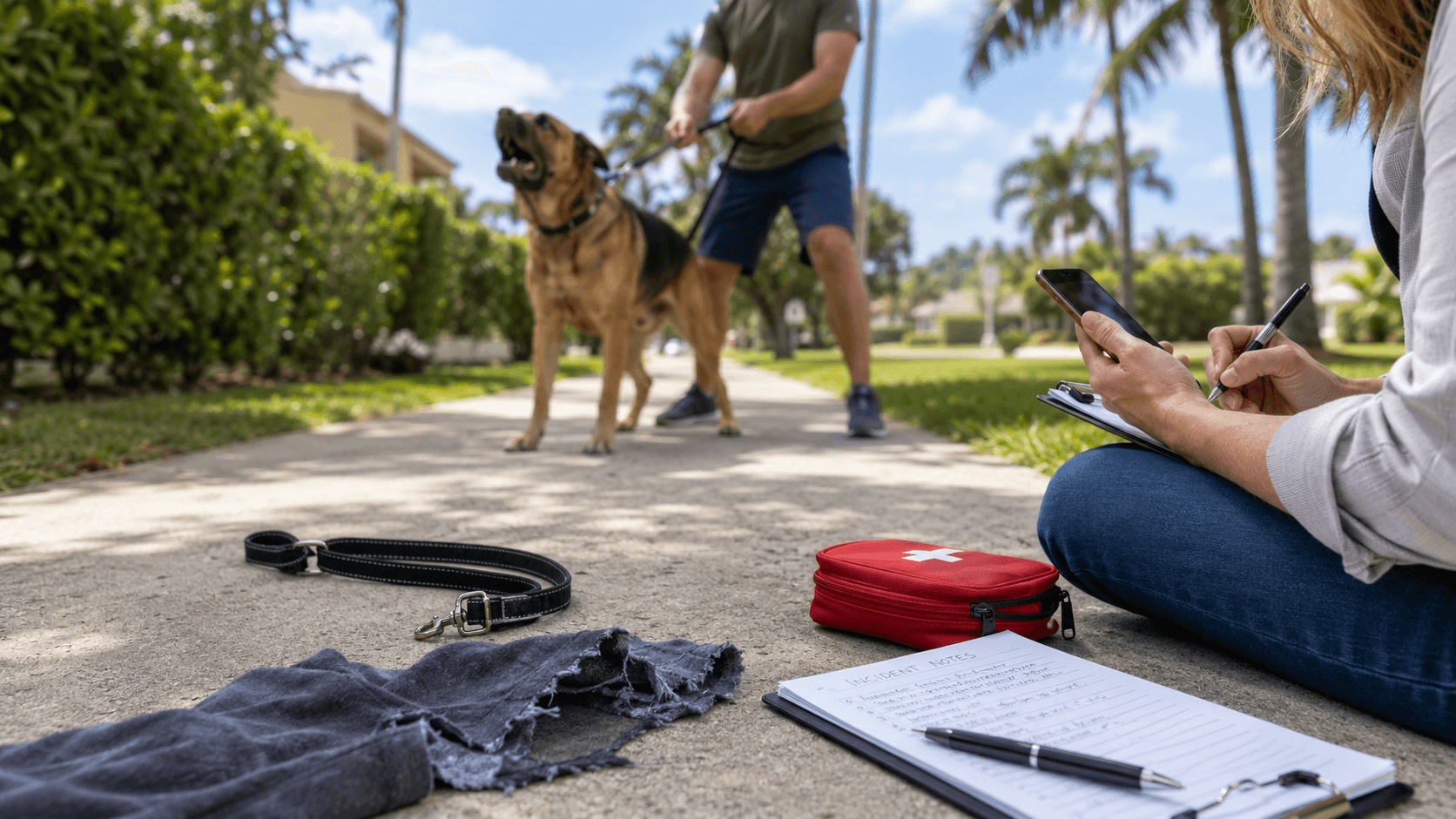
Preserve the animal-control report, photographs, video, medical records, bills, prescriptions, damaged clothing, witness contacts, employment records, and insurance communications. Keep the clothing in a safe condition if it contains tears, blood, or other physical evidence. Do not post detailed descriptions of the incident or recovery on social media. Preserve existing content rather than deleting it after a dispute arises.
Do Not Wait to Review Deadlines
Dog-bite cases can involve statutory liability, negligence, and other legal theories. Different limitations rules may apply depending on how the claim is framed and who is involved. Florida Statute 95.11 contains the state's civil limitations periods, including a general two-year period for negligence actions. Evidence deadlines are often much shorter. Video may be overwritten, the animal may be moved, property conditions may change, and witnesses may become difficult to locate. Prompt review can preserve options without assuming that a claim will be accepted.
What Should You Bring to a Dog Bite Consultation?
Bring the animal-control or police report number, owner information, photographs, video, witness contacts, medical paperwork, vaccination information, insurance correspondence, damaged clothing, and any messages concerning the dog. If the bite occurred at rental or commercial property, bring the lease, incident report, and communications with management.
Talk to Pipas Law Group
Have questions after an accident?
The Pipas Law Group team can review the details, explain what may matter, and help you think through your next step.